
Recovery from Ditches and Off-Road Situations
Winching and Extraction in Willards for vehicles stuck in mud, sand, ditches, and rural or construction site terrain
Rural roads around Willards transition from pavement to gravel shoulders that become mud channels during rain, creating situations where a vehicle slides off the roadway and settles into soft ground with the undercarriage resting on dirt. Delmarva Roadside Services Inc. uses winching and controlled pulling to extract vehicles from these positions without causing the frame damage or drivetrain stress that occurs when tow trucks attempt to drag a stuck vehicle across uneven ground. The service applies to cars that have slid into drainage ditches during storms, trucks trapped in construction site mud, and SUVs that have left established trails and become high-centered on stumps or rocks.
Winching involves attaching a steel cable to the vehicle's frame-mounted recovery points and using a motorized drum to apply steady pulling force while the stuck vehicle's weight is supported by the cable rather than dragged across the ground. The recovery vehicle positions itself on stable terrain upslope from the stuck vehicle, creating a pulling angle that lifts as it pulls, reducing undercarriage contact with obstacles. This controlled extraction prevents the sudden jolts and scraping that damage exhaust systems, oil pans, and suspension components when vehicles are yanked free without planning the recovery path.
Request winching service with information about what terrain the vehicle is stuck in and whether it slid, rolled, or drove into the current position.
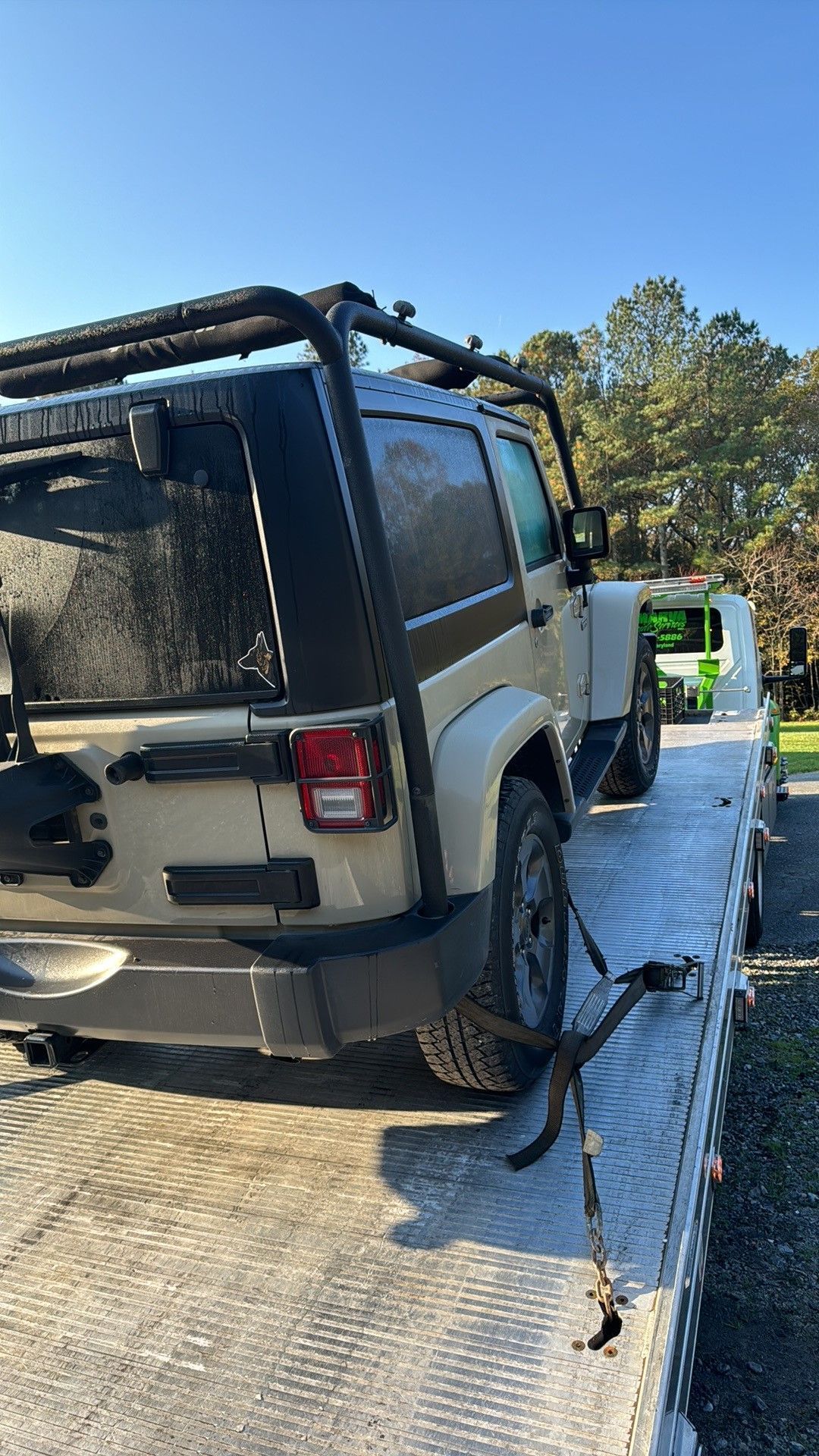
What You Notice Once Extraction Is Finished
The recovery operator surveys the stuck vehicle's position and the terrain between it and stable ground, identifying obstacles like fence posts, drainage culverts, or embedded rocks that the vehicle must clear during extraction. Winch cable routing avoids sharp angles that could cause the cable to snap under load, and tree straps protect anchor points from bark damage when natural anchors are used instead of the recovery vehicle's weight. The extraction proceeds in stages, with cable tension adjusted as the vehicle's weight shifts from resting on the ground to being supported by the winch.
After extraction, your vehicle sits on level, firm ground rather than tilted in a ditch or sunk in mud, with all four tires supporting the weight evenly. The steering responds normally when you turn the wheel, indicating no suspension damage from the recovery process, and the undercarriage shows scraping only from the initial incident rather than additional damage from being pulled out. You can drive away once the winch cable is disconnected and recovery points are inspected for stress cracks or bent mounting brackets that might require future attention.
Winching service is available for vehicles in roadside ditches, off-road recreational areas, private property, and job sites where construction equipment has created impassable mud. Response time depends on how far the stuck vehicle is from paved roads and whether the recovery vehicle can approach closely or must position at a distance and use extended cable lengths.
What Property Owners Usually Ask
Drivers stuck off-road need to understand the recovery process and what determines whether winching will work for their situation.
How do you know if a vehicle needs winching instead of towing?
Winching is necessary when the vehicle is stuck on unstable ground where a tow truck cannot safely position itself, or when the vehicle must be pulled horizontally before it can be lifted onto a flatbed.
What keeps the winch cable from breaking during extraction?
Cables are rated for loads significantly higher than vehicle weights, and tension is applied gradually rather than in sudden jerks that create shock loads exceeding the cable's working capacity.
Can winching damage my vehicle?
Properly executed winching uses factory-installed tow hooks or frame-mounted recovery points designed to handle pulling forces, avoiding attachment to bumpers or suspension parts that aren't engineered for extraction stress.
What if the vehicle is stuck in a location the recovery truck can't reach?
Extended winch cables and remote anchor points allow extraction from positions up to several hundred feet from where the recovery vehicle is parked, using intermediate pulleys to redirect cable angles when necessary.
How long does winching and extraction typically take?
Simple ditch recoveries often require fifteen to thirty minutes, while complex off-road extractions involving multiple anchor points and obstacle clearance can extend to an hour or more depending on terrain difficulty.
Delmarva Roadside Services Inc. responds to recovery calls in rural areas, construction zones, and off-road locations where standard towing isn't feasible. Call (443) 212-8352 when stuck off-road, describing the terrain and how the vehicle became trapped so appropriate equipment can be dispatched.